
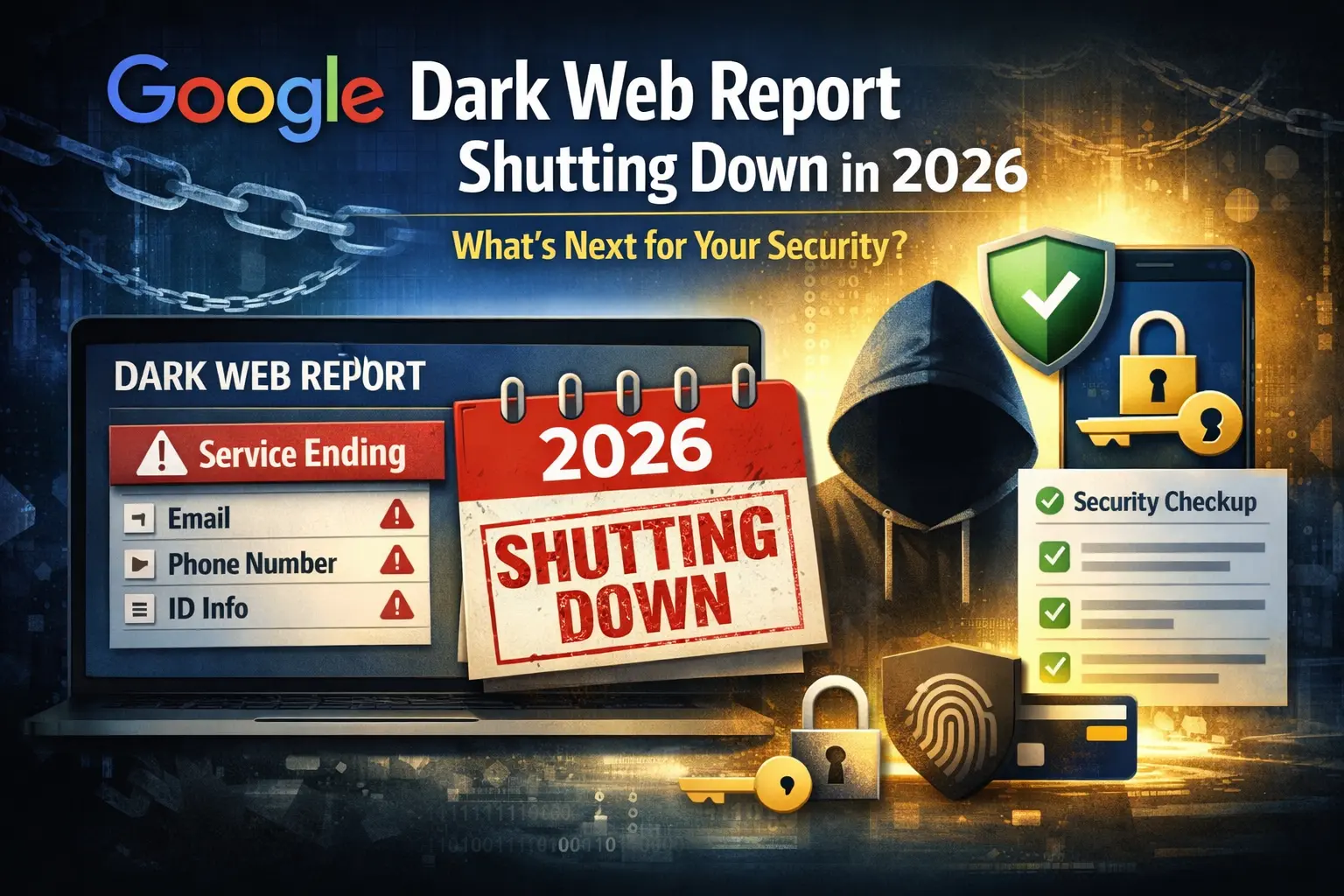
Google is shutting down its Dark Web Report tool in early 2026, stopping new breach scans on January 15, 2026 and deleting all related data and access by February 16, 2026. The company says it wants to focus instead on more actionable security tools like Security Checkup, passkeys, and password protections that offer clearer next steps for users.
What is Google’s Dark Web Report?
Google’s Dark Web Report is a security feature that scans dark web marketplaces and breach dumps to see if a user’s personal data has appeared there. It monitors identifiers such as name, email, phone number, address, and some government IDs, then sends alerts so users can respond to possible identity theft or account takeover risks.
Originally launched in 2023 as a Google One perk, Dark Web Report was later expanded in 2024 and made available to all Google account holders as a free tool. It was also integrated into Google’s “Results about you” page, where users could manage personal information exposed in Google Search.
Shutdown Timeline: January–February 2026
Google is winding down Dark Web Report in two main phases that users need to understand clearly.
- January 15, 2026: Dark Web Report will stop scanning for any new dark web results or additional breach matches tied to your monitoring profile.
- February 16, 2026: The tool will become fully inaccessible, previous reports will no longer be visible, and all Dark Web Report data (including monitoring profiles) will be deleted from Google’s systems.
This means users only have a limited window to review their final reports, export relevant information, or delete their monitoring profile early if they prefer. After the cutoff date, there will be no way to retrieve historical dark web alerts from Google.
Why Google is Ending Dark Web Report
Google’s public explanation centers on usefulness and actionability rather than cost or technical limitations.
- Lack of actionable next steps: Feedback showed that Dark Web Report often surfaced leaks but did not guide users clearly on what to do, leading many to feel the tool was not truly solving their problem.
- Shift to more practical protections: Google says it wants to prioritize tools that give “clear, actionable steps” to protect accounts, such as Security Checkup, passkeys, and built‑in password health features.
Despite retiring this feature, Google emphasizes that it will continue monitoring for threats and defending users from data abuse, including activity originating from the dark web, through other internal security systems and user‑facing tools.
How to Protect Yourself After Dark Web Report Ends
With Dark Web Report going away, users should proactively adopt other measures and tools to maintain visibility into data breaches and identity risks.
Recommended steps include:
- Use Google’s remaining security tools
- Regularly run Security Checkup on your Google account to review sign‑ins, devices, third‑party access, and security recommendations.
- Enable phishing‑resistant passkeys or at least two‑factor authentication (2FA) to harden account logins.
- Monitor your data via external services
- Use reputable breach‑monitoring platforms such as Have I Been Pwned or similar services from password managers and security vendors to get alerts when your email or passwords appear in breach datasets.
- Consider services from your bank or credit bureau that monitor identity theft and credit file changes if available in your region.
- Reduce your exposed personal information
- Use Google’s “Results about you” tool to remove sensitive personal details from search results where possible.
- Periodically change passwords for critical accounts, enable password manager alerts, and avoid password reuse across important services.
For many users, combining Google’s core security features with third‑party breach monitoring will offer a more actionable, multi‑layered defense than Dark Web Report ever provided.
Comments 0
No comments yet
Be the first to share your thoughts!
Leave a Comment